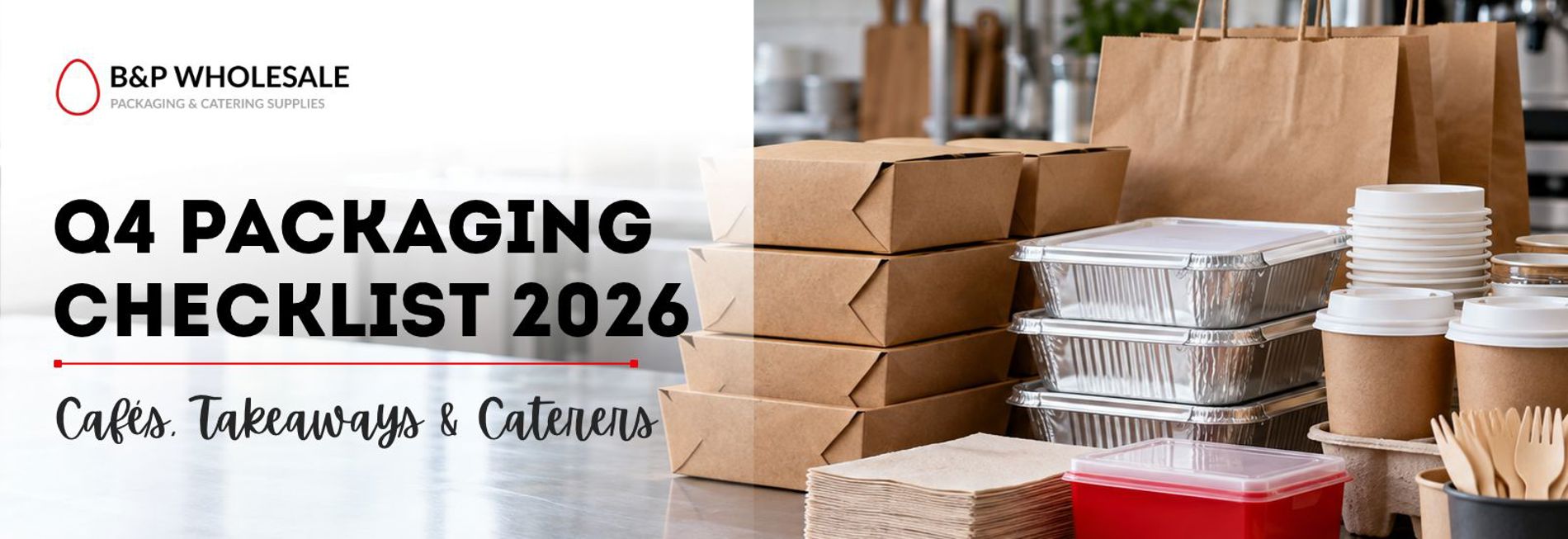
Q4 Packaging Checklist for Cafés, Takeaways & Caterers
Sharon Beech | September 30 2026Q4 is coming. Is your packaging stock ready?
The busiest months of the year can sneak up quickly. One minute, orders are ticking along as normal; the next, Christmas catering, office lunches, festive drinks and larger takeaway orders are all landing at once.
A packaging shortage does not always look dramatic at first. It might be a missing lid, the last sleeve of cups, or no carrier bags left for a larger collection order. But these small gaps can slow service, create last-minute substitutions and make a busy shift harder than it needs to be.
Use this Q4 packaging checklist to take stock before the rush starts. It is designed for cafés, takeaways, bakeries, caterers and food businesses that want to stay organised through the busiest part of the year.
Key takeaways
- Q4 packaging planning is not only about main containers. Lids, bags, napkins, cutlery and cleaning supplies can be just as important during a busy service.
- Check stock against your busiest order types, including office catering, festive bakes, large collections and delivery orders.
- Separate everyday packaging from the supplies needed for bigger or seasonal orders, so neither is overlooked.
- Set a clear reorder point now, rather than waiting until a shelf is nearly empty.
The Q4 packaging checklist
Work through this list with the person who orders stock and the people who pack or serve food every day. They will often spot practical issues that do not show up on an order sheet.
Containers for takeaway, delivery and festive food
- ☐ Takeaway containers
Check you have suitable sizes for your most popular hot and cold menu items. Do not forget sides, sauces and children’s portions if these are part of your regular order mix. - ☐ Foil trays and lids
These are particularly useful for hot meals, larger portions and catering orders. Check that you have the matching lids for every tray size you expect to use. - ☐ Kraft boxes and bowls
A reliable option for sandwiches, wraps, salads, loaded fries, bakery items and grab-and-go food. Confirm that your most-used sizes are easy to assemble during busy periods. - ☐ Food platters
Larger office lunches, meetings and festive gatherings can create a sudden need for platters. Count these separately from everyday containers so they are not used up by regular orders. - ☐ Cake and cupcake boxes
Bakeries and cafés may see more pre-orders, gifting and event orders in the run-up to Christmas. Check box sizes against your most popular bakes before taking large orders.
Drinks, service and customer handover
- ☐ Cups and lids
Plan for hot drinks, cold drinks and the lids that match them. A stack of cups is not much use if the correct lids or cup holders have run out. - ☐ Carrier bags
Think about the number of bags needed for larger collections, rather than just single-item orders. A busy Friday can use far more bags than a normal weekday. - ☐ Napkins and cutlery
These are easy to miss because they are small, but they are part of the finished customer order. Check portions, wrapped cutlery and any service-station supplies. - ☐ Stirrers and other small extras
If your business serves drinks, sauces or takeaway desserts, check the smaller accessories as well. These are often the first items to disappear during a rush.
Preparation, storage and clean-down
- ☐ Foil, cling film and parchment
These back-of-house essentials help with prep, storage, wrapping and protecting food before it reaches the counter. - ☐ Gloves
Review your normal weekly use, then consider whether longer opening hours, larger prep volumes or extra seasonal staff will increase demand. - ☐ Cleaning products
Busy kitchens and service areas need a dependable clean-down routine. Check you have the products your team actually uses, not just what is listed on an old order sheet. - ☐ Refuse sacks
Larger orders can create more packaging waste, food waste and general clean-up. Make sure you have suitable refuse sacks on hand before the busiest dates.
3 things businesses often forget
1. The little extras
Napkins, cutlery, lids, bags and stirrers do not take up much storage space, but they can have a big impact on service.
A missing lid can delay a whole drinks order. No carrier bags can make a large collection awkward for the customer. Running low on napkins may mean staff have to leave the counter during a rush to find more stock.
Add these items to the same stock review as your main containers. It is much easier to top them up now than to try to source them once every supplier is busy.
2. Packaging for larger orders
Q4 can bring a different type of order, not simply more of the same. A café might take on office breakfast trays. A bakery could receive more cake pre-orders. A takeaway may see larger family meal orders, work events or festive catering.
Look back at last year’s busiest weeks and ask:
- Which order sizes increased?
- Which packaging items were used more quickly than expected?
- Did staff have to substitute a container, tray or bag?
- Were there any difficult-to-pack orders that slowed the team down?
3. Back-of-house supplies
It is natural to focus on the packaging customers see. Yet the items used behind the scenes can be just as important when the workload increases.
Gloves, cling film, foil, parchment, cleaning products and refuse sacks help the kitchen stay organised and ready for the next order. If one of these runs out, the effect can be felt across preparation, service and close-down.
Build these items into your Q4 order plan rather than treating them as an afterthought.
How to work out how much stock you need
You do not need a complicated forecasting system to make a better Q4 order. Start with what happened last year.
Look at your busiest comparable weeks rather than using an average week. If you know that the final two Fridays before Christmas are always busier, use them as part of your planning baseline. Then consider any changes for this year, such as new menu items, longer opening hours, more delivery orders or additional catering work.
A simple approach is:
Last year’s use for a comparable busy period + expected increase in orders + a sensible buffer = your Q4 stock requirement
For example, if you used more kraft boxes, cups or foil trays during last December, do not simply reorder your normal quantity. Make room for the extra demand, especially for the items that cannot easily be swapped at the last minute.
It also helps to plan for two separate peaks:
- The early Q4 rush — autumn events, Halloween, Bonfire Night and the build-up to Black Friday.
- The Christmas rush — office catering, festive bakes, gift orders, end-of-year gatherings and last-minute collections.
Treating these as separate periods makes it easier to avoid using all of your larger-order packaging too early.
Check that the packaging works together
Before placing a larger order, test the combinations your team will use most often.
Put the correct lid on each container. Check that filled items stack safely. Try packing a typical large collection order into the carrier bags you keep in stock. If you serve hot food, make sure the container is practical for the journey from kitchen to customer.
This does not need to be a formal product trial. A quick practical check can reveal issues before your busiest weeks begin.
Ask your team:
- Does the lid fit securely?
- Is the container the right size for the portion?
- Does the bag comfortably hold the order?
- Can the packaging be packed quickly during a rush?
- Is the larger catering format easy to carry and serve from?
- Do we have enough space to store it safely?
A packaging choice that works well on a quiet Tuesday should still work when the counter is busy, the kitchen is full and several large orders are waiting.
Set a reorder point before stock gets low
The best time to reorder is not when the shelf is empty. Set a simple trigger for key items now.
For your core lines, decide the lowest number of cases, sleeves or packs you are comfortable holding. Your reorder point should cover normal delivery time and enough stock to keep serving during a busy period.
Keep the list visible to the person responsible for ordering. If several people take stock from the same storage area, make it clear who checks the levels and when.
It can also help to separate stock into three groups:
- Everyday essentials: items used on most shifts, such as takeaway containers, cups, lids and napkins.
- Large-order packaging: platters, larger foil trays, larger bags and bakery boxes.
- Back-of-house supplies: gloves, food wrap, cleaning products and refuse sacks.
This makes it harder for an everyday service rush to use stock that was meant for an upcoming catering booking.
Your final Q4 stock check
Before orders, events and Christmas catering start piling in, take ten minutes to confirm:
- Do we have enough packaging for our busiest menu items?
- Do we have matching lids for every container we plan to use?
- Are larger trays, platters and boxes ready for catering or office orders?
- Do we have enough cups, carrier bags, napkins and cutlery?
- Are foil, cling film, parchment and gloves stocked for prep?
- Are cleaning products and refuse sacks ready for higher waste volumes?
- Does everyone know when to reorder?
A little planning now gives your team one less thing to worry about when Q4 gets busy. The aim is simple: keep orders moving, keep food looking right and make sure customers leave with everything they need.
Stock up for Q4
Use this checklist to review your current supplies, then order the gaps before the rush begins.