How to Start a Catering Business in the UK
Sharon Beech | August 31 2026| Starting a catering company can turn cooking skills into a flexible business serving private parties, weddings, offices and public events. The opportunity is attractive, but success depends on more than a good menu. You also need sound costs, safe systems, dependable suppliers and a service customers can trust. |
|
This guide explains how to start a catering business in the UK, with practical notes for operators in Sheffield and the wider South Yorkshire area. It reflects current official guidance available in August 2026, but always confirm requirements with your local authority before trading. For dependable trade supplies as you plan your launch, visit B&P Wholesale, a Sheffield-based family business serving the catering trade for over 50 years.
Once the menu is taking shape, review your likely formats, quantities and delivery needs before ordering. B&P Wholesale's food packaging range makes it easier to compare practical options for hot meals, cold dishes, takeaway orders and catered events.
Key Takeaways
- Register every premises with the relevant local authority at least 28 days before trading, including a home kitchen, mobile unit or other operating site.
- Build a written food safety system from the start, covering the 4Cs, allergens, temperatures, cleaning, traceability and staff training.
- Price every job from its full cost—not ingredients alone—and include labour, travel, packaging, equipment, waste and contingency.
- Start within a tested capacity, use clear booking terms and rehearse the complete service before accepting a large event.
Choose a Business Catering Model and Clear Niche
The first decision is what kind of business catering you will provide and who will buy it. A defined niche makes menu planning, equipment purchases and marketing more focused. It also helps customers quickly understand why your service suits their event.
Common models include corporate lunches, wedding and party catering, buffet delivery, grazing tables, mobile street food, celebration cakes and specialist menus. You could also focus on dietary needs, regional dishes, premium presentation or cost-conscious workplace meals.
Compare Home, Mobile and Fixed-Premises Catering
A home catering business usually has lower overheads, but space, storage, household separation and delivery capacity can limit order size. A mobile unit offers visibility and access to markets or festivals, although vehicle, pitch, power, water and weather requirements add complexity.
A commercial kitchen or fixed site can support larger volumes and clearer production zones. It normally brings higher rent, rates and equipment costs, so forecast realistic sales before committing to a long lease.
Validate Demand Before Investing
List competitors within the area you can serve profitably. Compare their menus, minimum order, price per head, delivery zones, reviews and the occasions they target. Look for a clear gap rather than assuming that broad demand for food will automatically support your offer.
Test a small menu with people who match your intended customer. Record portion yield, preparation time, packaging performance and honest feedback on taste, appearance and price. A dish that works for six people may not remain practical or profitable at 60 portions.
Write a Catering Business Plan

Your plan should explain what you sell, who you serve and how each booking becomes profitable. It does not need to be overly formal, but it must be detailed enough to guide spending and expose weak assumptions.
Include your service area, sample menus, pricing method, production capacity, start-up costs, monthly overheads, staffing needs and sales forecast. Add a simple cash-flow projection because deposits, supplier payments and final client balances may fall in different months.
Calculate Your Safe Production Capacity
Set a maximum number of portions for each service type based on available refrigeration, oven space, preparation surfaces, transport equipment and labour hours. Use the lowest limiting factor, not the most optimistic number.
For example, enough oven capacity for 100 portions does not help if chilled storage safely holds ingredients for only 50. Capacity limits protect food safety, quality and your reputation while the business is still developing.
Set Booking Terms Before Taking Enquiries
Prepare written quote terms covering deposits, balance deadlines, guest-number changes, cancellations, delivery windows, equipment hire, breakages and overtime. State how dietary requirements and allergen information must be supplied and confirmed.
Clear terms reduce misunderstandings and help you decide when ingredient purchases become non-refundable. They also make a small operation look organised when competing for professional or corporate work.
Register the Business and Check Which Permissions Apply
Most start-ups operate as a sole trader or limited company. The right structure affects tax, administration, financial liability and how clients view the business. Review the official guidance on becoming a sole trader and forming a limited company, then take professional advice if the decision is unclear.
A sole trader must register for Self Assessment if annual gross trading income is more than £1,000. You should also monitor VAT taxable turnover: the compulsory registration threshold is currently more than £90,000, although thresholds can change.
Register as a Food Business
If you sell, cook, store, handle, prepare or distribute food, you will generally need to register with the local authority. Registration is free, cannot be refused and must be completed at least 28 days before trading. Each premises used by the business may need separate registration.
Sheffield operators can use the council's food business registration guidance. Registration is not the same as receiving permission for every activity, so check whether your model requires additional consent.
Some establishments handling products of animal origin and supplying other food businesses may require approval rather than ordinary registration. Contact the local authority before production if your wholesale or business-to-business model involves meat, fish, egg or dairy products.
Check Activity-Specific Licences
Depending on where and when you trade, you may need street trading consent, a premises licence for alcohol, or authorisation for late-night refreshment. In England and Wales, late-night refreshment generally covers selling hot food or drink to the public between 11pm and 5am.
Event organisers and landowners may also require proof of registration, insurance, hygiene competence and risk assessments. Confirm the documents required before paying for a pitch or committing to an event.
Rules on Selling Food From Home UK Caterers Must Follow
The rules on selling food from home UK operators must apply even when orders are taken only through social media or by recommendation. The home becomes a food business premises and can be inspected by the local authority.
Check whether you need permission from your landlord or mortgage provider, local planning authority or council. Ordinary home insurance may not cover commercial stock, equipment, visitors or business activity, and part of the property may be assessed for business rates.
Prepare the Home Kitchen for Inspection
An environmental health officer will consider food handling, the physical condition of the premises and how confidently safety is managed. Surfaces and equipment must be suitable, maintained and capable of being cleaned effectively.
Create enough separation between business food and household food, including clearly identified storage. Plan handwashing, cleaning, waste, pest control, laundry and pet exclusion. If domestic activity makes safe commercial production difficult, consider hiring a registered commercial kitchen.
Control Allergens and Labelling
Non-Prepacked Food
You must provide accurate information about the 14 regulated allergens. For non-prepacked food, allergen information may be given in writing or orally when a clear notice tells customers how to obtain it; written records should support any conversation.
Food Prepacked for Direct Sale
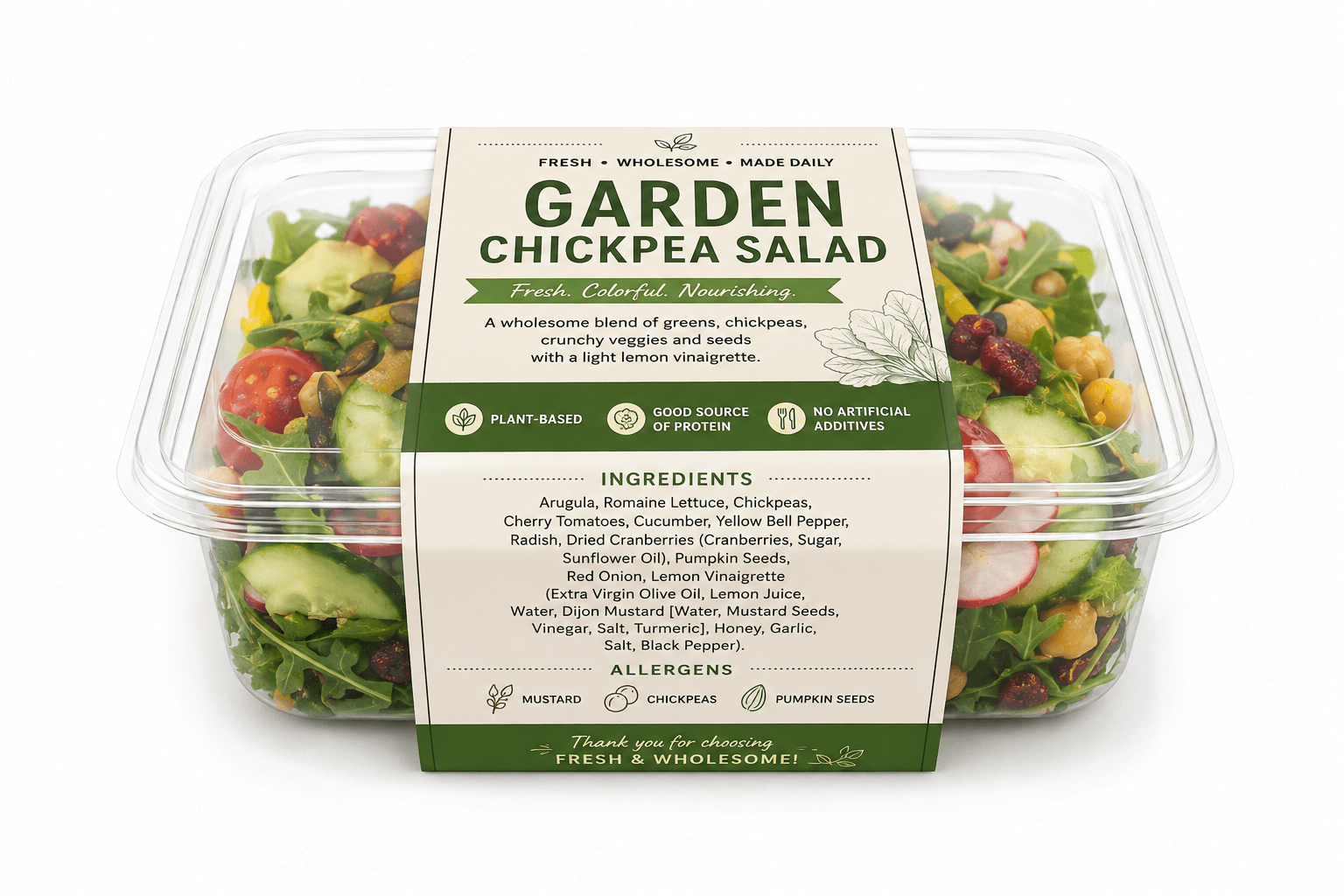
| Food prepacked for direct sale needs the product name and a full ingredients list with allergens emphasised. Keep current ingredient specifications from suppliers and update menus, labels and staff information whenever a recipe or product changes. |
|
Maintain Safe Temperatures During Storage and Delivery
In England, Wales and Northern Ireland, chilled food that requires temperature control must generally be kept at 8°C or below; setting refrigeration at 5°C or below provides a working margin. Hot-held food should generally remain at 63°C or above.
Use calibrated probe thermometers, insulated food-grade carriers and a recording system suited to your menu. Test the actual journey to the service area, because loading, traffic, waiting and venue access can extend the time food spends in transit.
Use Safer Food Better Business for Caterers
Food businesses must have and follow a food safety management system based on HACCP principles. For many small operations, Safer Food Better Business for caterers is a practical way to document safe methods and daily checks.
The pack helps cover the 4Cs: cooking, chilling, cleaning and avoiding cross-contamination. It also supports controls for allergens, personal hygiene, suppliers, stock rotation, pest control, maintenance and staff management.
Keep Records Useful and Current
Complete the safe methods for the way your business actually operates rather than copying generic answers. Maintain the diary, corrective actions, temperature checks, cleaning records, training notes and supplier details that support your procedures.
Records should show what happened when something went wrong. For example, note what you did when a fridge ran above its target temperature, a supplier substituted an ingredient or a delivery vehicle was delayed.
Train Anyone Who Handles Food

A food hygiene certificate is not automatically required in every role, but handlers must receive appropriate supervision and training for their work. Many start-ups choose recognised food hygiene training because it provides structured knowledge and evidence of competence.
Train temporary event staff as carefully as regular employees. They should understand hand hygiene, separation, allergen communication, illness reporting, temperature control and who has authority to stop service if food may be unsafe.
Plan Equipment, Packaging and Suppliers
Buy equipment from the menu and workflow, not from a generic wish list. Core needs may include refrigeration, cooking equipment, preparation tools, temperature probes, food-grade storage, insulated carriers, handwashing provision, cleaning supplies and serving equipment.
Map the flow from delivery to storage, preparation, cooking, packing, transport and service. This reveals bottlenecks and helps prevent raw ingredients, ready-to-eat food, dirty equipment and clean packaging from crossing paths.
Match Packaging to the Food and Journey
.jpg)
Choose containers only after testing portion size, heat, moisture, grease, stacking and journey time. A secure lid and stable base can matter as much as appearance when meals are carried through a venue or delivered across Sheffield.
For hot meals and baked dishes, compare formats that support safe handling and efficient stacking. B&P Wholesale supplies foil containers and lids in trade quantities for caterers who need practical options for preparation, transport or service.
Label every packed order clearly enough for staff to identify the client, dish, quantity and allergen status. Where relevant, include storage, reheating or use-by instructions that have been validated for the product.
Choose Reliable Trade Suppliers
Compare price, minimum order, pack size, delivery schedule, traceability and substitution policy. The lowest unit price may create more waste if the pack size is wrong or deliveries are unreliable.
Keep supplier invoices and product details so ingredients can be traced. Identify backup sources for critical items, but do not make unrecorded substitutions that could change allergens or invalidate information already given to the client.
Price the Service for Profit
Ingredient cost is only one part of a catering quote. Include preparation and service labour, employer costs, utilities, rent, travel, parking, packaging, cleaning, waste, payment fees, insurance, marketing and equipment depreciation.
Calculate a recipe cost per portion, then add the other direct costs of the booking and a fair share of overheads. Include a contingency allowance for price changes, extra time and unavoidable waste. Review actual results after every event.
Protect Cash Flow
Set a minimum order or minimum event charge where small jobs would otherwise consume too much time. Take a deposit before reserving the date and align the final payment deadline with the point at which you commit labour and stock.
Use a separate business bank account and maintain clear sales and expense records. Watch rolling taxable turnover for VAT and set money aside for tax rather than treating every customer payment as available profit.
Arrange Catering Business Insurance
Catering business insurance should reflect how and where you operate. Public liability can cover claims involving injury or property damage to third parties, while product liability can respond to claims linked to food supplied by the business. Venues and event organisers often specify minimum cover levels.
Consider cover for stock, equipment, buildings, business interruption, goods in transit and commercial vehicle use. Tell the insurer about home production, mobile trading, temporary staff, alcohol service and any high-value events so the policy matches the actual risk.
Employers' Liability Insurance
Employers' liability insurance is generally compulsory as soon as you become an employer. Cover must be for at least £5 million from an authorised insurer, subject to limited exceptions set out in the rules.
Display the certificate where employees can access it, including electronically where appropriate. Do not assume that casual, part-time or event staff fall outside your responsibilities; confirm their status with your insurer and adviser.
Build an Event-Day Operating Plan
Turn each confirmed booking into a production sheet. Include final guest count, recipes, allergen notes, preparation schedule, staff assignments, packing list, vehicle loading order, venue contact and service timeline.
Create a handover check so the correct food reaches the correct client. Separate and clearly identify special meals without presenting them as “allergen-free” unless your controls and evidence genuinely support that claim.
Prepare for Disruptions
Plan what happens if a staff member is absent, equipment fails, the vehicle is delayed or venue power is unavailable. Carry useful spares such as a calibrated probe, labels, food-safe containers and approved cleaning materials.
Agree a decision point for reducing, changing or stopping service if safety cannot be maintained. A written contingency plan supports calm decisions when an event is already under time pressure.
Rehearse Before the First Large Booking
Run the complete menu at realistic volume and time every stage. Pack it, load it, transport it for the expected journey, set up a mock service and measure temperatures on arrival.
The rehearsal will expose missing utensils, weak packaging, unrealistic prep estimates and transport problems while there is still time to fix them. Set the opening capacity from this evidence, then expand gradually.
Market Catering Services Effectively
People comparing caterers and catering services want evidence that you are reliable as well as creative. Build a simple website or landing page showing service area, event types, sample menus, minimum order, enquiry process and clear photographs of your own work.
Create or optimise a Google Business Profile where eligible, and ask genuine customers for reviews after successful bookings. Use local phrases naturally, such as wedding catering in Sheffield or office lunch delivery in South Yorkshire, on relevant service pages.
Turn Enquiries Into Bookings
Reply with a structured form that captures date, venue, guest count, service style, budget and dietary requirements. Qualify the enquiry before producing a detailed proposal so time is focused on realistic opportunities.
Follow up consistently and record why quotes are won or lost. During the first 90 days, track enquiry-to-booking rate, average order value, food-cost percentage, waste, on-time delivery and repeat business.
Build Local Relationships

Introduce the business to venues, event planners, offices, community organisations and complementary suppliers. A small tasting can demonstrate both the food and the presentation, but cost it as a marketing activity rather than giving samples without a clear target.
Use social media to show preparation standards, menu development and real event setups with permission. Consistency builds more trust than occasional polished posts that do not explain how to enquire or book.
Catering Business Launch Checklist
- Define the niche, customer and profitable service area.
- Test the menu, portion yield, packaging and transport time.
- Write the business plan, cash-flow forecast and capacity limit.
- Choose a legal structure and complete the relevant HMRC or Companies House steps.
- Register every food premises at least 28 days before trading.
- Confirm planning, landlord, mortgage, street trading, alcohol and late-night permissions where relevant.
- Complete the food safety management system and allergen controls.
- Arrange suitable catering business insurance.
- Approve suppliers and retain traceability records.
- Write quote, deposit, cancellation and event-day terms.
- Train staff and run a full timed rehearsal.
- Prepare a website, local listings and enquiry process.
When you are ready to standardise everyday service items, review B&P Wholesale's catering disposables and choose only the lines that fit your tested menu, service style and expected order volume.
Conclusion
Learning how to start a catering business in the UK means combining food skill with disciplined planning. A clear niche, accurate pricing, local registration, documented safety systems and suitable insurance create the foundation for dependable service.
Start with a menu and order volume so you can reproduce safely. Test the full journey from supplier to service, learn from each booking and expand only when your kitchen, staff, transport and cash flow can support it. That measured approach gives a new catering business the best chance to earn repeat customers and grow sustainably.