Becoming a better event caterer is not simply about learning more recipes. Great event catering combines dependable food, careful planning, confident service and the ability to solve problems before guests notice them.
.png)
This guide explains how to become a better event caterer in the UK, with practical advice for independent caterers, growing teams and established operators. It is informed by current UK guidance and the realities of serving weddings, workplace functions, private parties and public events.
For over 50 years, Sheffield-based B&P Wholesale has supplied food packaging and catering essentials to businesses across the trade. That experience shows that better results often come from improving everyday systems: choosing the right supplies, planning quantities accurately and making service easier for the team.
Once you know the events and menus you want to improve, review your food packaging options against portion size, temperature, journey time and presentation. Standardising a small number of tested formats can make ordering, packing and service more consistent.
Key Takeaways
- A better caterer works from one confirmed event brief covering guests, timings, venue access, service style and dietary needs.
- Menus should be tested at event volume, including preparation time, holding quality, portion yield, transport and plating speed.
- Strong food safety depends on a working system, accurate allergen handovers and trained staff—not paperwork completed only for inspection.
- Every event should end with a review of timing, waste, profit, feedback and problems so the next service becomes easier and stronger.
Strengthen Your Catering Customer Service
Good catering customer service begins before the menu is discussed. Clients may know the atmosphere they want but not the practical details needed to achieve it. A better caterer listens carefully, asks structured questions and explains trade-offs without making the client feel dismissed.

Clarify the event purpose, venue, date, guest profile, estimated numbers, budget and preferred service style. Ask what matters most: speed, choice, visual impact, dietary variety, premium ingredients or a relaxed guest experience.
Create One Controlled Event Brief
Record every agreed detail in a shared event brief. Include arrival time, access instructions, final headcount, menu, service sequence, allergens, equipment, staffing, contact names and what the venue or client will provide.
Give the document a version date and define a final-change deadline. When the client requests an amendment, confirm its effect on price, staffing or timing and update the master copy rather than relying on scattered messages.
Set Expectations Early

Explain what the quoted service includes and excludes. State deadlines for deposits, final numbers, dietary information, venue access and balance payments, as well as the process for cancellations or late changes.
Clear expectations protect the relationship. Clients are more likely to trust a caterer who identifies practical limits early than one who agrees to everything and struggles on the day.
Improve Your Event Catering Menu Planning
Effective event catering menu planning considers how food behaves outside the ideal conditions of the kitchen. A dish must still taste, look and serve well after production, packing, transport, holding and repeated plating.
Choose food that suits the event schedule, available facilities and service style. A formal plated menu needs different labour and timing from a buffet, canapé reception, grazing table or packaged workplace lunch.
Design for Consistency at Volume
Test recipes at the quantity you expect to sell. Record raw and cooked yield, portion weight, active labour time, cooling or holding needs and the number of portions your equipment can produce safely in each batch.
Limit unnecessary last-minute elements. A garnish that takes 15 seconds sounds minor, but across 200 plates it adds 50 minutes of work. Keep details that noticeably improve the guest experience and simplify those that create delay without enough value.
Offer Choice Without Creating Chaos
Build menus from components that share ingredients or preparation methods where possible. This reduces stock complexity while still allowing vegetarian, vegan, cultural and other suitable options.
Avoid describing food as allergen-free unless your controls genuinely support that claim. Dietary preference and medically necessary allergen control are not the same, so the kitchen and service team must know which requests require specific handling.
Make Catering Food Safety Part of Daily Work
Better catering food safety comes from habits that work during busy production and off-site service. Food businesses must have food safety management procedures based on HACCP principles and should keep them current when menus, suppliers, premises or working methods change.
For small catering businesses in England and Wales, the Food Standards Agency's Safer Food Better Business for caterers pack provides a practical structure. Northern Ireland has separate Safe Catering guidance, while Scottish operators should follow Food Standards Scotland and local-authority requirements.
Build an Allergen Handover
Allergen information can fail when it passes from sales to the kitchen and then to front-of-house staff. Use one documented handover showing the guest, dish, relevant allergens, agreed controls and the person responsible for final verification.
Check current supplier specifications before confirming an adapted meal. If an ingredient is substituted, stop and reassess the allergen information rather than assuming that another brand has the same formulation.
Control Food During Transport and Service

In England, Wales and Northern Ireland, chilled food that requires temperature control must generally be kept at 8°C or below; setting refrigeration at 5°C or below provides a useful margin. Hot-held food should generally remain at 63°C or above.
Use suitable insulated carriers and calibrated probe thermometers, then record checks where your food safety system requires them. Plan for loading time, traffic, venue queues and delayed service, not just the driving time shown on a map.
Master Event Catering Logistics
Event catering logistics turn kitchen preparation into a successful guest experience. Even excellent food can be undermined by poor access, missing equipment, limited power, a late setup or unclear responsibility at the venue.
Visit unfamiliar venues where possible. If a site visit is not practical, request photographs, measurements, access notes and written confirmation of the available facilities.
Complete a Venue Operations Check

Confirm loading location, parking restrictions, stairs, lifts, door widths, setup time and the distance between the vehicle, kitchen and service area. Check power supply, potable water, refrigeration, handwashing, waste arrangements, lighting and weather cover.
Ask who controls venue access and who can resolve a problem on the day. A general office number is rarely useful when the team is waiting outside a locked service entrance.
Use an Event Catering Checklist and Run Sheet
Build an event catering checklist from reusable categories: food, packaging, cooking and holding equipment, service ware, cleaning, safety, signage, documents and personal items. Assign every item to a named person for packing and checking.
The run sheet should show the critical times from production through breakdown. Add decision points, such as when food must leave the kitchen, when the buffet must open and when a delay requires the service plan to change.
Setup
Sequence unloading so the equipment needed first is accessible first. Keep routes clear, separate food from chemicals and waste, and identify hot equipment or trip hazards before guests enter the area.
Service
Assign responsibility for food replenishment, temperature monitoring, allergen questions, guest communication and clearing. The event lead should be free to supervise rather than being trapped at one station.
Breakdown
Plan dirty equipment, leftover food, waste, hired items and final venue checks. A controlled breakdown prevents losses and leaves the venue with the professional final impression that supports future referrals.
Develop Event Catering Skills Through Training
The most useful event catering skills include organisation, time management, communication, attention to detail, adaptability and calm leadership. Culinary ability remains essential, but a strong individual cook does not automatically create a coordinated event team.
Train staff for the role they will perform and the risks they may encounter. The Health and Safety Executive identifies slips and trips, manual handling, hot surfaces, harmful substances, dermatitis and knife injuries among important catering concerns.
Hold a Focused Team Briefing
Before travel or setup, brief the team on the event purpose, timeline, uniform, station assignments, menu, allergen procedure, venue rules and escalation route. Ask staff to repeat critical instructions back rather than assuming that silence means understanding.
Use a simple chain of command. Everyone should know who can approve a menu substitution, contact the client, change service timing or stop food from being served.
Define the Service Standard

Show staff what “ready” looks like for each station. Set expectations for greeting guests, replacing utensils, clearing tables, keeping displays tidy and responding when they do not know an allergen answer.
Short post-event coaching is more effective than vague criticism. Discuss the specific action, its effect and what should happen at the next event.
Improve Catering Presentation and Packaging
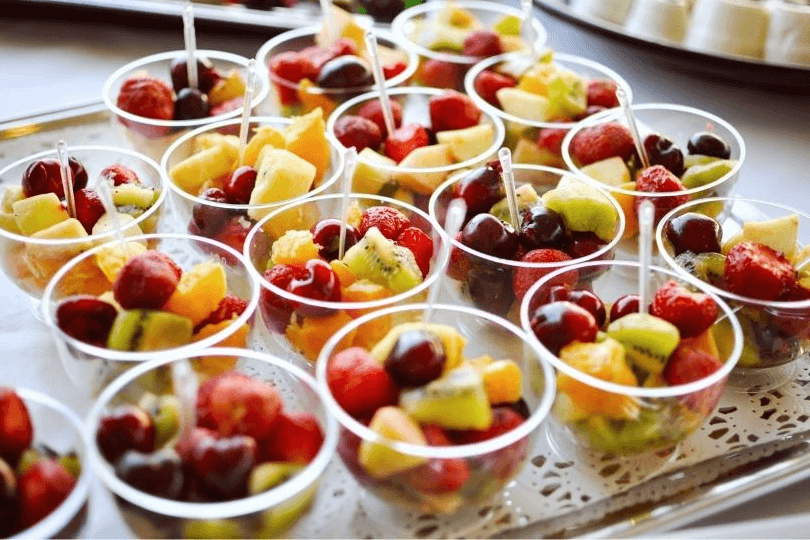
Catering presentation and packaging should protect the food while supporting the style of the event. The best choice depends on whether items are displayed, passed, delivered, reheated or served directly from the container.
Test stability, lid fit, heat, condensation, grease resistance, stacking and labelling. Packaging that looks attractive when empty may perform poorly once it is filled, moved through a venue and held for service.
Make Buffet and Sharing Displays Easier to Manage
Use consistent platter sizes and create a photo guide showing how each display should look. This helps different team members reproduce the same presentation and makes replenishment less disruptive.
For buffets, meetings and sharing-style events, B&P Wholesale's food platters provide practical formats that can be considered alongside the menu, portion plan and transport method.
Label for the Team as Well as the Guest
Labels should help staff identify the event, dish, quantity, destination and any controlled dietary meal. Use a system that remains readable in refrigeration, transport and low-light service areas.
Do not rely only on colour. Written identifiers reduce confusion when lighting is poor, labels are viewed by colour-blind staff or several special meals are handled at once.
Prepare for Problems and Recover Service Well
Flexibility is valuable when it is supported by preparation. List likely failures such as staff absence, delayed transport, equipment faults, bad weather, power loss, missing stock or a changed guest count.
For each high-impact risk, decide what the team can do, who makes the decision and when the client must be informed. Carry proportionate backups rather than trying to duplicate the entire operation.
Build a Small Event Recovery Kit
Useful spares may include a calibrated probe, labels, markers, tape, extension leads approved for the setting, serving utensils, food-safe storage, cleaning materials and basic repair items. The contents should match the service and venue.
When standardising frequently used service items, review B&P Wholesale's catering disposables and choose only products that have been tested with your menu and event setup.
Communicate Before a Delay Becomes a Surprise
If the plan is at risk, tell the relevant client or venue contact what has happened, what you are doing and when the next update will come. Offer realistic options rather than reassurance you cannot guarantee.
Good service recovery does not erase every problem, but it can preserve trust. Clients remember whether the caterer stayed organised, honest and solution-focused under pressure.
Build a More Profitable Event Catering Business
Profitable event catering depends on knowing the true cost of each job. Ingredients are only part of the calculation; include planning, shopping, preparation, service, travel, parking, packaging, cleaning, waste, equipment and administration.
Compare the estimate with the actual result after the event. A popular package may still be weak if it regularly needs overtime, creates excessive leftovers or uses equipment that limits the number of simultaneous bookings.
Measure Event-Level Performance
Track sales, direct costs, labour hours, gross profit, waste, complaints, compliments, delays and repeat enquiries. Review results by menu and service style rather than looking only at monthly revenue.
Use the findings to adjust minimum orders, travel zones, staffing ratios, menu prices and change deadlines. Improvement becomes much easier when decisions are based on records instead of memory.
Reduce Waste Without Reducing Reliability
Confirm final numbers at an agreed deadline and use standard portion tools. Record untouched surplus separately from preparation waste and plate waste because each has a different cause.
Better forecasting should not mean serving too little. It means understanding which events, dishes and serving methods consistently create excess and correcting the source.
Strengthen Your Reputation After Every Event
Send a concise follow-up while the event is fresh. Thank the client, ask specific questions about food, timing and service, and request a review or permission to use photographs where appropriate.
Keep records of client preferences and past issues. Repeat customers appreciate being remembered, and the information helps the team avoid asking the same questions again.
Run a Short Post-Event Review
Bring the lead staff together for ten focused minutes. Ask what worked, what caused delay, what was missing, what was wasted and what should change before the same type of event is booked again.
Assign each improvement to a person and deadline. A lesson has little value if it never changes a recipe, checklist, quote template, training note or packing system.
Conclusion
Understanding how to become a better event caterer in the UK requires a shift from relying on talent alone to building repeatable systems. The strongest caterers combine good food with accurate briefs, tested menus, disciplined safety, trained teams and reliable event logistics.
Choose one improvement after every booking and make it part of the way the business works. Over time, those small operational gains lead to calmer events, stronger margins, better reviews and customers who are confident booking again.