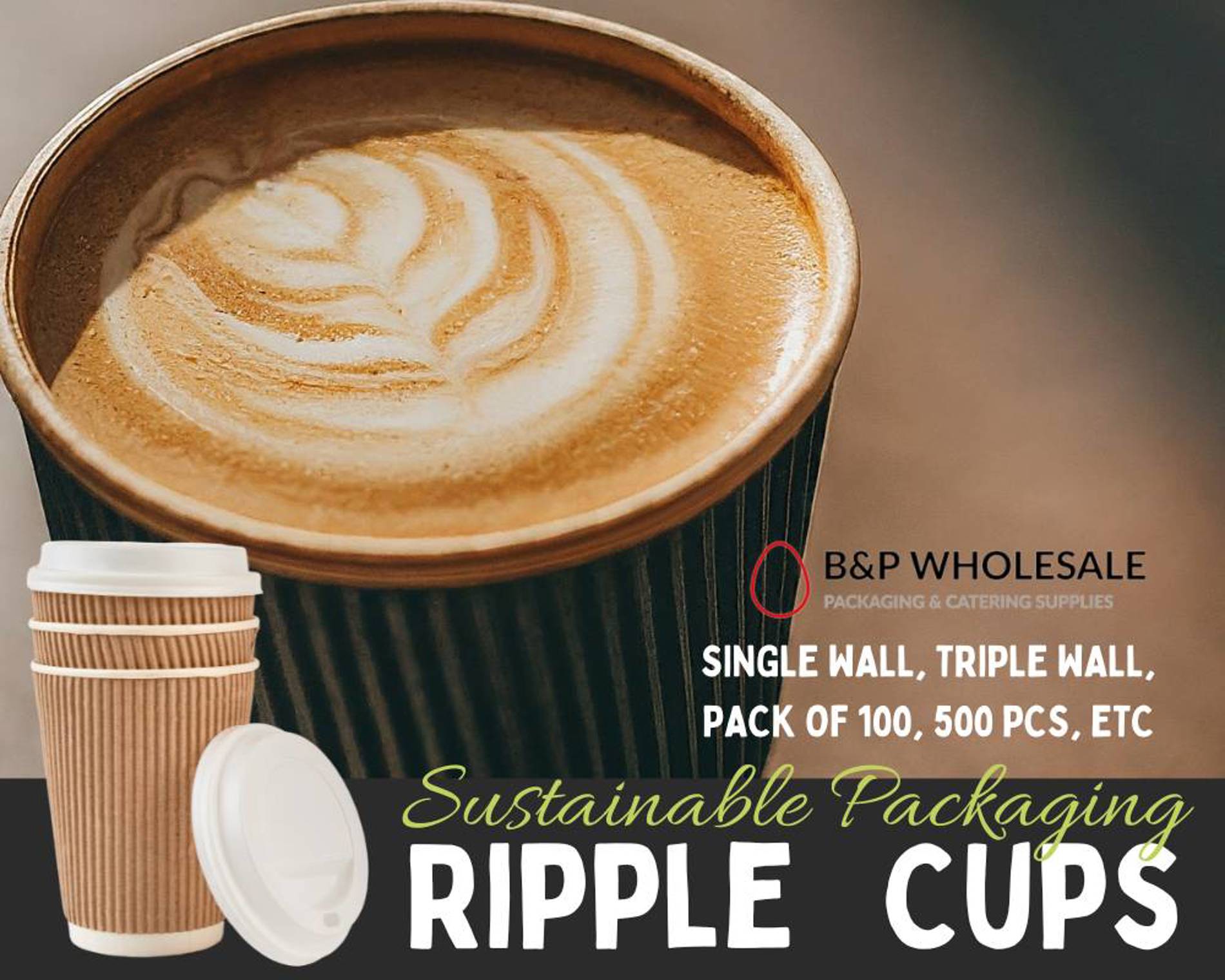
Are Kraft Ripple Cups Recyclable?
| May 30 2026Reusable mugs may be the ideal option for reducing waste, but millions of takeaway coffees, teas and hot drinks are still served in disposable paper cups every day. For cafés, coffee shops, caterers and takeaway businesses, kraft ripple cups remain a popular choice because they keep drinks hot, protect customers’ hands and remove the need for a separate cardboard sleeve.
However, many businesses and customers still ask the same question: are kraft ripple cups recyclable? The answer depends mainly on the cup lining and how the cup is collected after use.
This guide explains how kraft ripple cups are made, how they should be disposed of in the UK, and how cafés can choose better hot drink packaging from trusted suppliers such as B&P Wholesale, a family-run business with over 50 years of experience supplying catering disposables, cups and food packaging across the UK.
Key Takeaways
Kraft ripple cups are made from paper with an inner lining. Ripple cups consist of a paper cup wrapped in an additional corrugated paper layer for insulation. The inner cup is usually coated to make it leak-proof.
Recycling depends on the lining. Cups with PE linings can be recycled through dedicated paper cup collection schemes, while PLA or compostable linings usually require industrial composting.
Ripple cups are recyclable, but usually not through kerbside bins. In the UK, paper cups need specialist recycling facilities that can separate the paper fibre from the plastic lining.
B&P’s double-wall ripple cups are 100% recyclable. Their cup range includes kraft and black ripple cups designed for insulation, comfort and responsible disposal through appropriate recycling schemes.
What Are Kraft Ripple Cups?
Kraft ripple cups are disposable hot drink cups made by wrapping a single-wall paper cup in an extra layer of corrugated paper. This rippled outer texture traps air between the layers, creating a natural insulation barrier.
This design helps keep hot drinks warm while keeping the outside of the cup more comfortable to hold. That is why ripple cups are commonly used for coffee, tea, hot chocolate and other takeaway drinks.
The kraft appearance gives the cup a natural brown finish, which many cafés prefer because it feels simple, rustic and eco-conscious. However, the cup still needs an internal lining to hold liquid safely.
Common Ripple Cup Linings
To stop hot drinks from leaking through the paper, the inner cup is usually coated with one of the following linings:
Polyethylene, or PE: The traditional plastic lining used in many paper cups. It makes the cup leak-proof but must be separated from the paper during specialist recycling.
Polylactic acid, or PLA: A plant-based bioplastic used in some compostable cups. PLA cups require industrial composting and should not be placed in standard paper cup recycling streams.
Water-based or aqueous coatings: Newer coatings designed to reduce plastic use and make paper cups easier to pulp and recycle.
For businesses comparing hot drink options, B&P Wholesale’s wider cups range includes disposable cups suited to cafés, takeaways, events, catering businesses and coffee shops.
Are Kraft Ripple Cups Recyclable in the UK?
PE-Lined Ripple Cups
Most kraft ripple cups on the market have a PE lining. These cups can be recycled, but they usually cannot be placed in normal household paper or cardboard recycling bins.
This is because disposable paper cups are made from both paper fibre and a thin plastic lining. Standard paper recycling systems are not always equipped to separate these layers. Instead, PE-lined cups need to be collected through dedicated paper cup recycling schemes.
When processed correctly, specialist recycling facilities can separate the paper fibre from the lining. The recovered paper can then be turned into new paper products, while the plastic lining may be processed separately.
PLA-Lined and Compostable Ripple Cups
Some ripple cups are marketed as compostable because they use PLA or another plant-based lining instead of conventional plastic. While this sounds more sustainable, it does not mean the cup can go into normal paper recycling.
PLA-lined cups need industrial composting facilities to break down properly. If there is no commercial composting collection available, these cups often end up in general waste. They should also not be mixed with PE-lined paper cups in cup recycling bins because they require a different disposal route.
Water-Based or Plastic-Free Coated Cups
Water-based or plastic-free coatings are designed to make paper cups easier to recycle or compost, depending on the specific product. These can be a promising option for cafés that want to reduce plastic use.
However, disposal still depends on local recycling infrastructure and supplier guidance. Businesses should always check whether the cup is accepted in standard recycling, dedicated cup recycling or commercial composting.
Recyclability of B&P’s Ripple Cups
B&P Wholesale supplies double-wall ripple cups designed for hot drinks, insulation and customer comfort. These cups are labelled as 100% recyclable, making them a practical choice for cafés and takeaways that want reliable hot drink packaging with a clearer disposal route.
B&P’s kraft ripple cups are available in different sizes and finishes, including kraft and black options. Their double-wall design helps keep drinks hot for longer while keeping hands cooler, which means customers do not usually need a separate cardboard sleeve.
This can help reduce the number of separate packaging items used per drink. Businesses can browse B&P’s cups, catering disposables and food packaging ranges to find suitable options for drinks, takeaway meals and café service.
How to Recycle Kraft Ripple Cups
Kraft ripple cups can only be recycled properly when they are collected and processed in the right way. For cafés, this means giving customers clear disposal instructions and, where possible, providing dedicated collection points.
Finish the drink and empty the cup. Cups should be empty before they go into a recycling bin. Leftover liquid can contaminate the collection.
Remove the lid. Plastic lids, stirrers and sleeves may need to be recycled separately depending on the material and local guidance.
Use a designated paper cup recycling bin. Look for dedicated cup recycling points in coffee shops, workplaces, universities, airports, city centres and some fast-food chains.
Do not place cups in normal paper recycling unless accepted locally. The plastic lining needs specialist processing, so paper cups can contaminate ordinary paper and cardboard recycling streams.
Compostable cups need composting, not paper recycling. If the cup is labelled compostable, it should go to an industrial composting facility where accepted.
Choose suppliers who provide clear disposal guidance. This helps staff and customers understand where cups should go after use.
Are Ripple Cups Eco-Friendly?
Whether ripple cups are eco-friendly depends on the cup material, lining, sourcing, disposal route and whether a recycling scheme is available. A recyclable cup only delivers its environmental benefit if it is actually collected and processed correctly.
Resource Use
Ripple cups combine the cup and insulation layer in one product. This means customers do not need a separate cardboard sleeve for hot drinks. For busy cafés, this can reduce the number of extra packaging items handed out with each order.
The ripple layer also improves grip and comfort, which can reduce spills and improve the takeaway experience. For cafés serving a high volume of coffee, tea or hot chocolate, this can be a practical packaging upgrade.
Recycling Infrastructure
PE-lined ripple cups are recyclable in theory, but they need specialist collection and processing. If they are thrown into ordinary bins or mixed with general paper recycling, they are unlikely to be recycled properly.
Cafés that want to use recyclable ripple cups should consider whether they can provide a dedicated cup bin, join a commercial cup recycling scheme or direct customers to nearby collection points.
Compostability
Compostable cups may sound like the easiest eco option, but they only work well when commercial composting is available. If customers do not have access to the correct composting stream, compostable cups may still end up in general waste.
For many small cafés, widely recyclable PE-lined ripple cups collected through paper cup recycling schemes may currently be more practical than compostable cups without a composting route.
Eco-Friendly Alternatives to Standard Ripple Cups
Aqueous-Coated Ripple Cups
Some suppliers offer paper cups with water-based or plastic-free coatings. These are designed to be easier to pulp than traditional PE-lined cups and may offer improved recyclability.
Businesses should check whether these cups are certified as recyclable, compostable or PFAS-free, and whether their local waste provider can process them correctly.
Reusable Cups
Reusable cups remain the most sustainable option because they reduce single-use packaging altogether. Cafés can encourage customers to bring reusable mugs by offering loyalty points, small incentives or clear signage at the counter.
Even if not every customer brings a reusable cup, making reuse part of the café experience can gradually reduce disposable cup waste.
Bagasse and Compostable Food Packaging
For food service, cafés may also consider compostable packaging such as bagasse food packaging. Bagasse is made from sugarcane fibre and is suitable for many hot, wet and oily foods.
While bagasse is not a direct replacement for hot drink cups in every setting, it can support a wider eco-conscious packaging strategy across takeaway meals, sides, snacks and catering items.
Recommended Products from B&P Wholesale
For cafés, takeaways, food stalls and caterers, B&P Wholesale offers a practical range of cups, food packaging and catering essentials. If you are reviewing your hot drink packaging, the following categories are useful:
Cups – Includes hot drink cups and takeaway cup options for cafés, coffee shops, events and catering businesses.
Bagasse Food Packaging – A compostable option for hot food, sides, snacks and takeaway meals.
Kraft Boxes, Bowls and Trays – Useful for cafés that want natural-looking food packaging for salads, rice bowls, street food and takeaway meals.
Catering Disposables – A wider range of disposable catering supplies for events, food service and hospitality businesses.
Paper Products – Helpful for napkins, paper essentials and everyday café service needs.
Businesses can also browse B&P Wholesale’s wider selection of food packaging, foil containers and lids, microwavable containers, carrier bags, counter products, till rolls and cleaning products to support day-to-day operations.
Frequently Asked Questions
Do Kraft Ripple Cups Go in Household Recycling Bins?
No, not usually. Most kerbside recycling schemes in the UK cannot process paper cups because of their inner lining. Kraft ripple cups should be placed in dedicated paper cup recycling bins where available.
Are Kraft Ripple Cups Compostable?
Only some kraft ripple cups are compostable. Cups with PLA or other compostable linings may be compostable through industrial composting facilities. Standard PE-lined ripple cups are not compostable, but they can be recycled through specialist paper cup recycling schemes.
Do You Need Sleeves for Kraft Ripple Cups?
No. The corrugated outer layer acts as built-in insulation. It helps keep the cup comfortable to hold while keeping hot drinks warm, so a separate cardboard sleeve is usually unnecessary.
Are B&P’s Kraft Ripple Cups Microwave Safe?
Kraft ripple cups are designed for hot beverages and soups, but microwave suitability should always be checked on the specific product label or supplier guidance. If there is no microwave-safe marking, transfer the contents to a microwave-safe container before reheating.
Are B&P’s Kraft Ripple Cups Recyclable?
Yes. B&P’s double-wall ripple cups are labelled as 100% recyclable. To recycle them properly, they should be collected through appropriate paper cup recycling schemes rather than placed in general kerbside paper recycling.
Conclusion
So, are kraft ripple cups recyclable? Yes, many are recyclable, but they need the right disposal route. Most kraft ripple cups have an inner lining that must be separated from the paper fibre, so they should be collected through dedicated paper cup recycling schemes rather than standard household recycling bins.
Compostable ripple cups with PLA or other plant-based linings require industrial composting and should not be mixed with ordinary paper cup recycling. For cafés and caterers, the most practical approach is to choose clearly labelled recyclable cups and educate customers on how to dispose of them properly.
B&P Wholesale supplies 100% recyclable double-wall ripple cups that offer strong heat retention, a comfortable grip and a professional takeaway drink experience. By pairing these cups with designated recycling bins and clear customer guidance, businesses can serve hot drinks confidently while reducing unnecessary waste.